High Protein Hiking Meals UK: Practical Trail Food That Actually Pulls Its Weight
A practical guide to high protein hiking meals in the UK, with realistic snack ideas, lunch options, and camp dinners that suit day hikes, wild camps, and short multi-day trips.
On this page
If you are looking for high protein hiking meals UK walkers will genuinely pack, the answer is not to throw half a gym cupboard into your rucksack and hope for the best.
A better approach is simpler. Pack food that does three jobs well:
- gives you enough total calories for the route
- includes enough protein to make meals and snacks satisfying
- still feels realistic to eat on a wet, windy British hill
That means fewer fantasy meal-prep ideas, more food you will actually eat with cold hands and limited patience.
If you want the quick version, use the meal planner to work out the trip shape first, then build around a few protein-heavy snacks, one solid lunch, and a proper dinner if you are staying out.
The short version
For most UK hiking trips, a sensible high-protein setup looks like this:
- before you leave: a proper breakfast with oats, eggs, yoghurt, or nut butter
- while walking: one or two easy protein snacks like jerky, cheese, nuts, or a decent bar
- lunch: something savoury and easy to eat, such as wraps, oatcakes, tuna sachets, or hard cheese
- for camp: a hot dinner with useful calories and enough protein to feel like recovery food, not just warm wallpaper paste
- as backup: one extra snack in case the route, weather, or your timing goes sideways
Protein matters, but calories still do the heavy lifting.
What protein is actually doing on a hike
Protein is useful on the trail because it helps with:
- satisfaction, so lunch does not feel like a sugary placeholder
- recovery, especially after a steep day or back-to-back walking days
- meal quality, because a food bag full of sweets gets grim quite quickly
What it does not do is replace total energy intake.
A lot of people make the same mistake here. They chase protein numbers, then end up under-fuelled because they forgot that hills run on calories, not good intentions.
A more useful way to think about trail food is:
- carbs keep you moving
- fat helps with staying power and calorie density
- protein makes the plan more satisfying and helps afterwards
That balance is much more useful than trying to make every item in your bag a bodybuilding statement.
What makes a good high protein hiking meal?
A good option should pass five simple tests:
- Easy to carry. If it leaks, crushes, or turns into misery in a side pocket, it is not helping.
- Easy to eat outdoors. Lunch on a British ridge is rarely elegant.
- Worth the weight. Protein is useful, but not if the calorie return is poor.
- Matched to the trip. Day hike food, overnight camp food, and multi-day trail food are not the same job.
- Pleasant enough to repeat. If you never fancy eating it, you packed ballast.
That is why the best high-protein hiking food is usually practical, not clever.
Best high protein hiking foods for UK trips
Jerky and biltong
These are compact, savoury, and genuinely useful when you want protein without stopping to assemble a meal.
Best for:
- quick trail snacks
- breaking up a day of sweet food
- adding something more substantial to a short stop
Watch for:
- high cost if you rely on it too heavily
- salt levels, especially if you are already thirsty
Tuna or salmon sachets
Far more useful than tins, and much easier to work into wraps, oatcakes, or crackers for lunch.
Best for:
- no-cook lunches
- day hikes
- simple overnight setups
Watch for:
- the obvious issue that not everyone wants fish sitting in a warm pack for hours
Hard cheese
Still one of the best hiking foods around. It brings protein and fat, works with almost anything savoury, and feels like real food rather than a compromise.
Best for:
- cooler weather day hikes
- lunch stops
- oatcakes, wraps, and crackers
Watch for:
- warm-weather handling if the UK briefly decides to behave like southern Europe
Protein bars and protein flapjacks
Useful because they are simple and portable, not because every bar with 20 grams of protein is automatically good.
Best for:
- backup snacks
- quick top-ups during long climbs
- a fast post-hike option before you get home
Watch for:
- bars that taste like sweetened plasterboard
- expensive branding doing more work than the ingredients
Nuts, seeds, and nut butter sachets
These are not pure protein foods, but they belong in real hiking food plans because they are calorie-dense, easy to carry, and good at making a snack feel less flimsy.
Best for:
- grazing food across the day
- boosting calories without much bulk
- pairing with fruit, chocolate, or oatcakes
Watch for:
- easy overpacking because small portions look deceptively modest
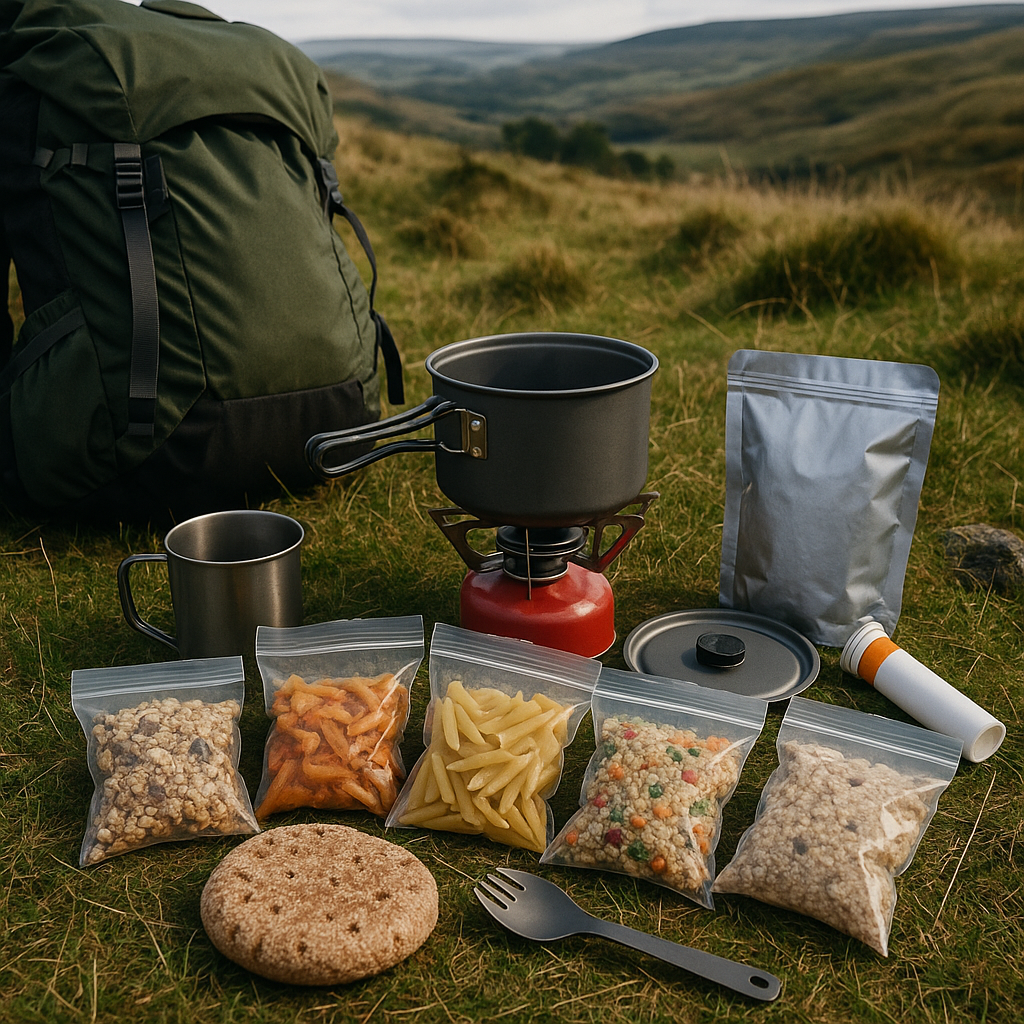
Dehydrated and freeze-dried meals
For overnight trips and multi-day walks, this is where protein can start to feel properly useful. A hot meal with decent protein and enough calories is one of the easiest ways to feel human again at camp.
Useful options from the current Trail Meals range include:
- Expedition Foods Chicken Korma with Rice
- Expedition Foods Asian Noodles with Chicken and Mixed Vegetables
- Real Turmat Pulled Pork with Rice
Those links are here because they fit the decision, not because every article needs product confetti.
What to pack for different trip types
For a standard UK day hike
Keep it simple. You usually want one proper lunch, two easy snacks, and one spare item.
A practical setup might be:
- breakfast before leaving: porridge with nut butter, eggs on toast, or Greek yoghurt with oats
- snack 1: jerky, a protein flapjack, or mixed nuts
- lunch: wrap with tuna, chicken, or cheese, plus oatcakes or fruit
- snack 2: nuts, cheese, or a bar
- backup: chocolate, trail mix, or another bar for a slower-than-planned finish
If you already know you eat badly when tired, pack savoury food on purpose. An all-sweet hiking menu gets old fast.
For an overnight wild camp
This is where a proper evening meal matters more.
A simple structure is:
- breakfast: porridge with powdered milk, nuts, or peanut butter
- walking snacks: jerky, bars, roasted chickpeas, nuts
- lunch: oatcakes, cheese, fish pouch, or wrap
- camp dinner: one hot dehydrated meal with enough calories to count
- extra: hot chocolate, pudding, or another snack if the weather is miserable
High-protein dinners earn their place here because they help with recovery and morale. Both matter.
For two to three day trips
Repeatable food matters more than novelty. Pack things you still want on day two when everything is damp and your standards have slipped.
A useful pattern is:
- rotate savoury snacks and sweeter snacks
- keep lunches simple and low-fuss
- use one hot dinner per night
- avoid relying on bars for half your intake unless you enjoy low-grade resentment
How much protein do you actually need?
Usually less than the internet suggests, and spread through the day rather than dumped into one heroic dinner.
For most walkers, the sensible target is not "make everything ultra high protein".
It is:
- get protein into breakfast
- include one or two reliable protein snacks
- make lunch substantial enough to feel like a meal
- finish with a proper dinner on overnight trips
That is enough for most practical hiking use. The exact number matters less than whether the full food plan is realistic, sufficient, and something you will eat.
If you want help building that from your route length and energy needs, start with the meal planner rather than guessing in the kitchen at 6 am.
Common mistakes with high protein hiking food
Packing for protein and forgetting calories
This is the main one. A food plan can look nutritionally impressive and still leave you flat by mid-afternoon.
Choosing foods that are annoying outdoors
Messy tubs, elaborate meal prep, or foods that only work at a proper table are usually dead on arrival.
Relying too much on bars
Protein bars are useful tools. A whole day built around them feels like an administrative error.
Ignoring trip conditions
Cold weather, long days, and overnight camps all push you towards higher-calorie, easier-recovery food. A summer day walk and a wet spring overnighter do not need the same menu.
A simple shopping list for a better high-protein hike
If you want a fast starting point, build from this:
- one proper breakfast item
- one savoury lunch base, such as wraps or oatcakes
- two protein snacks
- one calorie-dense snack
- one backup item
- one hot dinner if camping
Then pressure-test it.
Ask:
- would I actually want to eat this in bad weather?
- is there enough total food here?
- have I packed at least one savoury option?
- is the camp dinner worth carrying?
That small check is usually more useful than endlessly tweaking macros.
If you want to compare specific options, browse the catalog. If you want to turn them into a usable packing plan, the meal planner is the more practical next step.
You may also want these adjacent guides:
Final thoughts
The best high protein hiking meals UK walkers rely on are not complicated. They are practical, satisfying, and easy to repeat.
In practice, that means:
- keep protein in the mix, but do not neglect total calories
- use savoury foods as well as snack bars
- match the plan to the route and conditions
- make hot dinners earn their weight on overnight trips
Build the rough plan first, then refine it. That is what the meal planner is for.
Because a food plan that works on paper but feels grim halfway up a hill is still a bad plan.
FAQ
What is a good high protein snack for hiking in the UK?
Jerky, biltong, hard cheese, nuts, protein flapjacks, and tuna sachets are all practical choices. The best option is the one you will still want after a few hours outdoors.
Are protein bars enough for a hiking lunch?
Usually not. They are useful as part of the day, but lunch is generally better when it includes something more substantial and preferably savoury.
Are freeze-dried meals good for high protein hiking food?
Yes, especially for overnight and multi-day trips. They are one of the easiest ways to get a proper hot dinner with useful calories and decent recovery value.
Do I need high protein hiking meals for a short day hike?
Not necessarily, but including some protein usually makes the day feel better fed and more stable than relying on sugar-heavy snacks alone.
How do I avoid overpacking high protein food?
Start with trip length and route difficulty, then use the meal planner to build a sensible base. After that, add one spare snack rather than packing as if you are provisioning a siege.
Related articles
Lightweight Camping Gear Checklist for UK Hikes
A practical UK hiking gear checklist that keeps pack weight down without forgetting the food, stove, water, and safety basics that…
Published 8 May 2026
High Calorie Hiking Snacks for Long Distance: What Is Actually Worth Carrying?
A practical guide to high calorie hiking snacks for long-distance trips, focused on calorie density, pack efficiency, repetition…
Published 25 Apr 2026
No-Cook Hiking Food Ideas UK: How to Eat Well Without Carrying a Stove
A practical guide to no-cook hiking food for UK trips, including where it saves weight and faff, and where a hot meal still earns its place.
Published 25 Apr 2026
Vegetarian Freeze-Dried Meals Review: Which Ones Are Actually Worth Carrying?
A practical review of vegetarian freeze-dried meals for hikers who want real calories, decent protein, and meals that actually justify…
Published 25 Apr 2026
Turn this advice into a usable food plan
Open the meal planner
Apply trip length, calorie targets, and dietary preferences to a generated meal plan built from real products.
Build a food planCompare products in the catalog
Use the catalog and product pages to compare weights, calories, and meal types related to this topic.
Browse real products