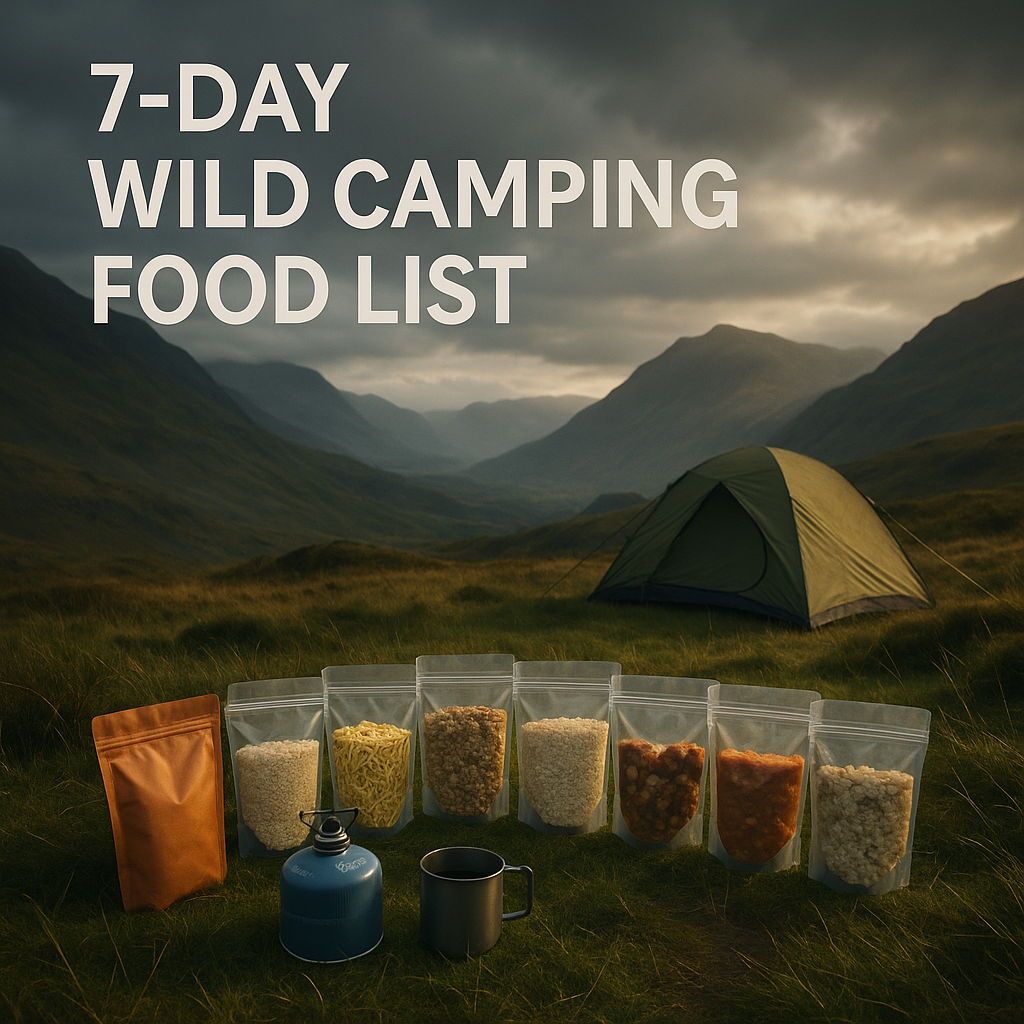
7-Day Wild Camping Food List for UK Trips: A Practical Week-Long Plan
A practical 7-day wild camping food list for UK trips, with a realistic meal structure, packing logic, calorie checks, and stronger links into the planner and related guides.
On this page

A good 7-day wild camping food list is less about creativity and more about not making your week harder than it needs to be. Over seven days, small mistakes compound. Too much food means dead weight. Too little food means a grim second half of the trip. Too many fiddly meals means camp admin starts feeling like a punishment.
For most UK trips, the sensible target is simple: enough calories, enough variety, and meals that still feel manageable when the weather is damp and your legs are cooked.
This guide gives you a realistic week-long food structure, what to pack for each part of the day, where freeze-dried meals actually help, and how to connect the whole thing back to your route, stove setup, and pack weight.
The short version
- Build your week around simple breakfasts, easy trail lunches, dependable dinners, and dense snacks.
- Save the heaviest decision-making for home, not for a wet evening on day four.
- For most UK wild camps, one hot meal per day is enough.
- Use ready meals, couscous, oats, wraps, nuts, and snack foods where they genuinely reduce hassle.
- If you want to check calories and carried weight properly, use the meal planner before buying the whole week.
What a 7-day food list needs to do
A week-long trip has a different job from an overnight camp. Your food needs to:
- give you enough calories for repeated hiking days
- stay manageable in a small pack
- cope with damp UK conditions
- avoid too much washing up and fuel use
- still be appealing enough that you actually eat it late in the trip
That last bit matters more than people admit. A technically efficient food plan is still a bad plan if you stop wanting to eat half of it by day five.
Start with the daily structure, not the shopping list
The easiest way to plan a 7-day wild camping food list is to repeat a workable daily pattern. For most hikers, this is enough:
- Breakfast: oats, granola, or another quick, warm, low-fuss meal
- Lunch: wraps, cheese, cured meat, nut butter, or easy no-cook food
- Dinner: one reliable hot meal with enough calories to feel like a proper end to the day
- Snacks: trail mix, bars, chocolate, dried fruit, and a bit of extra insurance food
If you begin with that structure, the rest gets much easier. If you start by buying random food first, you usually end up carrying duplicate ideas in different packaging.
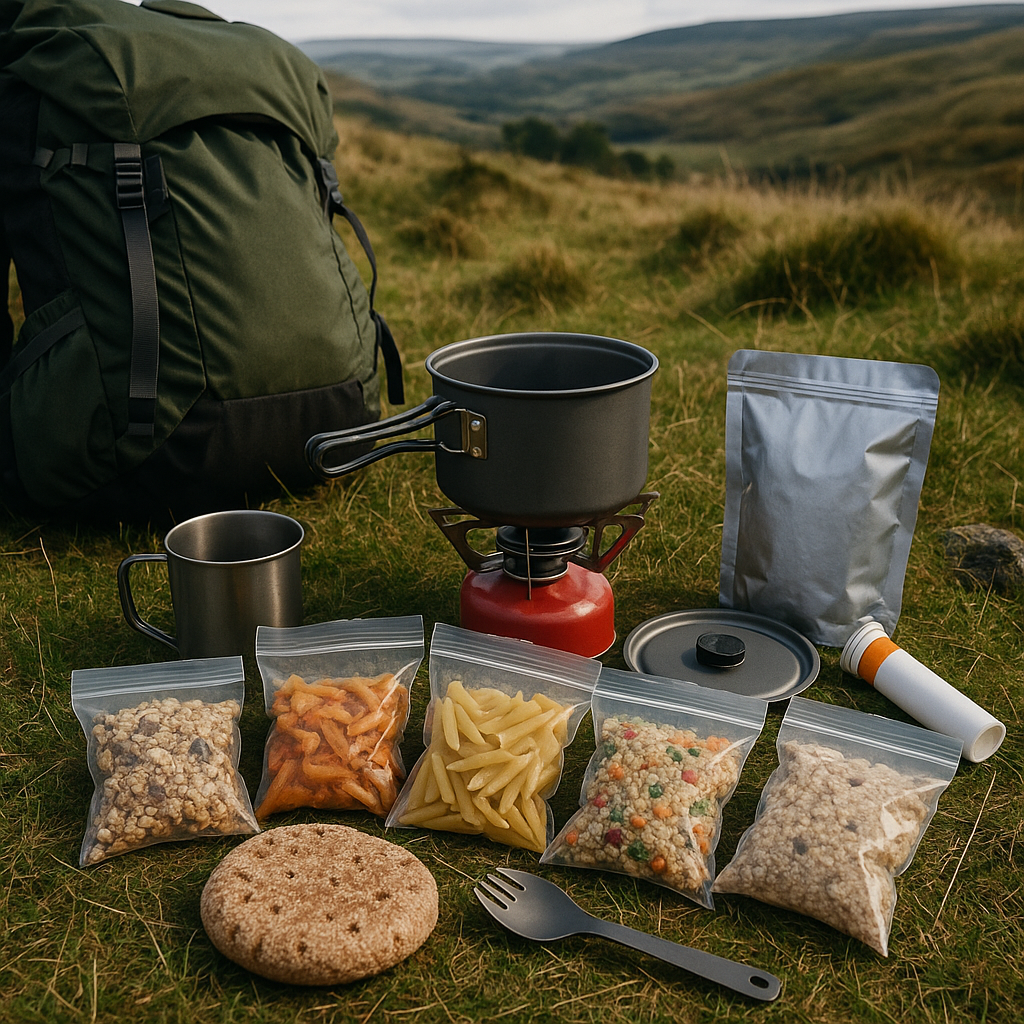
A practical 7-day wild camping food list
This is not the only way to do it, but it is a realistic UK-friendly starting point.
| Day | Breakfast | Lunch | Dinner | Snacks |
|---|---|---|---|---|
| 1 | Porridge with dried fruit | Wraps with cheese and salami | Adventure Menu Meatballs with Basmati & Tomato Sauce | Nuts, flapjack, chocolate |
| 2 | Instant oats and powdered milk | Peanut butter wraps and trail mix | Couscous with olive oil and added protein | Dried fruit, oat bar |
| 3 | Granola and powdered milk | Crackers, hard cheese, jerky | Adventure Menu Chicken in Wild Sauce with Rice | Nuts, sweets, chocolate |
| 4 | Porridge with seeds | Tuna wrap and snack bar | Instant noodles upgraded with sachet protein or extras | Trail mix, shortbread |
| 5 | Instant oats and coffee | Cheese, wraps, salami | Adventure Menu Chicken Korma with Rice | Dried fruit, flapjack |
| 6 | Granola or muesli | Nut butter wraps and nuts | Mash or couscous with soup or dehydrated extras | Chocolate, energy bar |
| 7 | Fast breakfast you will actually eat | Leftover lunch bits or simple wraps | Easy finish-line dinner or café food if route allows | Emergency snacks kept in reserve |
That gives you variety without pretending every day needs a bespoke menu.
Breakfast: keep it boring on purpose
Breakfast is not where most week-long trips are won. It just needs to be easy, warm enough if the morning is cold, and calorie-dense enough to stop you starting empty.
Good options for a 7-day wild camping food list include:
- instant porridge
- oats plus powdered milk
- granola or muesli if you want less stove time
- coffee, tea, or electrolyte drink if that helps you actually eat early
If you already know you struggle to eat a big breakfast before walking, do not pack fantasy breakfasts. Pack something small and reliable, then make sure your morning snacks are stronger.
Lunch: minimise faff
Most UK hikers do better with lunches they can eat quickly without stopping for a full kitchen performance. Good lunch food is:
- easy to grab
- stable in the pack
- decent for calories
- not too messy in wind or rain
Wraps tend to beat bread because they pack better. Hard cheese, nut butter, salami, tuna pouches, and trail mix are still doing useful work because they solve real trail problems rather than looking interesting on Instagram.
If you want more one-day ideas, the 5-day wild camping food list and what to eat on a day hike UK are sensible next reads.
Planning a full week of meals?
Use the Trail Meals Planner to balance calories, weight, and meal variety for your entire 7-day trip in minutes.
Dinner: where convenience usually earns its keep
Dinner is where specialist backpacking food makes the most sense. By evening, you are tired, the weather may be turning, and washing up becomes deeply unappealing.
That is why a few ready meals or freeze-dried dinners often deserve their place in a week-long plan. They are not always the cheapest calories, but they can still be the best trade when you care about:
- low fuss
- faster camp setup
- lower cleaning effort
- predictable portioning
A few Trail Meals options that fit naturally here are:
- Adventure Menu Meatballs with Basmati & Tomato Sauce
- Adventure Menu Chicken in Wild Sauce with Rice
- Adventure Menu Chicken Korma with Rice
These links are useful when you already know dinner is the one place you want convenience. They are not there to decorate the page.
Looking for more?
Explore a wide range of 7-day wild camping meals and freeze-dried dinners at Base Camp Food to complete your ultimate food list.
Snacks are not optional padding
A lot of weak food plans treat snacks like an afterthought. On a week-long trip, that is how you end up flattening in the afternoon.
A good snack layer usually includes a mix of:
- nuts or trail mix
- flapjacks or oat bars
- chocolate
- dried fruit
- one emergency item you do not touch unless the day goes long
Snacks are especially important if your breakfasts are light or your route includes repeated climbs. They are not glamorous, but then neither is bonking halfway up a wet hill.
Common mistakes that make a 7-day plan worse
Packing too much variety
Variety is useful up to a point. After that, it just means more decisions, more packaging, and more dead weight.
Treating every meal like a hot meal
For most UK trips, one hot meal a day is enough. Sometimes two. Rarely three.
Ignoring calorie density
Food can be lightweight and still underpowered. If it will not keep you going, it is not efficient just because it looks tidy in a spreadsheet.
Forgetting water and stove reality
A meal plan only works if you can actually cook it in the conditions you expect. If your setup is minimal, plan around that honestly.
Carrying food you do not really want to eat
The end of a seven-day trip is not the time to discover you packed six meals out of pure optimism.
Packing and prep tips that actually help
- portion food by day or meal block before you leave
- use simple resealable bags where possible
- keep day snacks accessible instead of burying them
- separate emergency calories from normal grazing food
- test one or two dinners at home if you have not used them before
If you are still deciding on cookware or water treatment, these can support the plan naturally:
- MSR Trail Mini Duo Cook Set for a compact stove-and-pot setup
- LifeStraw Peak Series Compact Gravity Water Filter System 3L if refill planning matters on your route
Make the planner do the boring maths
The best reason to use the meal planner is not inspiration. It is avoiding stupid mistakes.
Before a week-long trip, it is worth checking:
- total calories for the trip
- daily calorie level for your route type
- likely carried food weight
- where heavier dinners or extra snacks are actually justified
That is also the natural next step after reading this guide. If you already know your route length and rough calorie target, the planner helps turn a rough 7-day wild camping food list into a proper packable plan.
Related reading for the same cluster
If you need to narrow this down further, these are the most useful next hops:
- 5-Day Wild Camping Food List
- Cheap Freeze-Dried Backpacking Meals in the UK: What’s Actually Worth Buying?
- Lightweight Dinner Ideas for Lake District Hikes
- Fuel Smart: Why Calories Matter on Multi-Day Hiking Trips
Final take
A strong 7-day wild camping food list is simple, repeatable, and honest about the trip you are actually doing. Keep breakfasts easy, lunches low-fuss, dinners dependable, and snacks generous enough to cover the rough patches.
If you want the fastest next step, run your route through the meal planner, then fill the gaps with food that genuinely earns its space in the pack.
FAQ
How much food should I carry for 7 days of wild camping?
That depends on your route, pace, and calorie needs, but seven-day trips usually justify checking both calories and carried weight properly rather than guessing. Use the meal planner to sanity-check the numbers before you buy everything.
Are freeze-dried meals worth using for a 7-day trip?
Usually yes for some dinners, not necessarily for every meal. They make the most sense where convenience, low washing up, and packable hot food matter most.
What is the easiest lunch setup for UK wild camping?
Wraps, cheese, cured meat, nut butter, tuna pouches, bars, and trail mix are usually the easiest low-fuss options because they travel well and do not need much prep.
Do I need specialist hiking food for the whole week?
No. Most people do better mixing ordinary food with a few specialist dinners or convenience items, rather than trying to make every meal look like expedition marketing.
What should I read next after this guide?
If you want the shorter-trip version, go to the 5-day wild camping food list. If you are comparing dinners, the cheap freeze-dried backpacking meals guide is the better next step.
Related articles
Lightweight Camping Gear Checklist for UK Hikes
A practical UK hiking gear checklist that keeps pack weight down without forgetting the food, stove, water, and safety basics that…
Published 8 May 2026
High Calorie Hiking Snacks for Long Distance: What Is Actually Worth Carrying?
A practical guide to high calorie hiking snacks for long-distance trips, focused on calorie density, pack efficiency, repetition…
Published 25 Apr 2026
No-Cook Hiking Food Ideas UK: How to Eat Well Without Carrying a Stove
A practical guide to no-cook hiking food for UK trips, including where it saves weight and faff, and where a hot meal still earns its place.
Published 25 Apr 2026
Vegetarian Freeze-Dried Meals Review: Which Ones Are Actually Worth Carrying?
A practical review of vegetarian freeze-dried meals for hikers who want real calories, decent protein, and meals that actually justify…
Published 25 Apr 2026
Turn this advice into a usable food plan
Open the meal planner
Apply trip length, calorie targets, and dietary preferences to a generated meal plan built from real products.
Build a food planCompare products in the catalog
Use the catalog and product pages to compare weights, calories, and meal types related to this topic.
Browse real products